

Long before refrigerated trucks, airplanes, or even a reliable road system along the Maine coast, somebody had to solve a difficult problem: How do you get thousands of live lobsters from a quiet fishing village to a growing city like Boston?
The answer was a boat built to hold the ocean.
It was called a well smack. For much of the 1800s and into the early 1900s, these vessels traveled the coast, buying from fishermen and helping turn lobstering from a local meal into a major commercial industry. And some of the earliest recorded trips began right here in Harpswell. The market didn’t wait for a highway; it sailed right into our harbors.
A Boat Designed to Leak
The genius of the well smack was the “well” itself. A section of the hull was separated from the rest of the boat by watertight bulkheads. Inside that compartment, holes were bored through the hull planks, allowing seawater to flow freely in and out. The rest of the boat stayed dry, but the lobster hold was a constantly circulating tank of fresh ocean water. It was a floating lobster pound, an ingenious solution for keeping the cargo alive for days.

Harpswell and the First Smackmen
In 1899, a government agent named John N. Cobb documented Maine’s lobster industry. He wrote that well smacks from Boston were visiting Harpswell for lobsters as early as 1830. He even described Harpswell as the place where the earliest recorded commercial lobster fishing in Maine took place.
We know about one of these early smackmen, Captain E. M. Oakes, who ran a 41-ton smack called the Swampscott. In 1841, his route took him to Cundy’s Harbor and Horse Island Harbor. In just four months, he made ten trips and carried about 35,000 lobsters to Boston, all bought from just five or six local fishermen working from small wooden boats.
Shaping the Fishery Itself
The smackmen didn’t just buy lobsters; their presence changed how people fished. For instance, winter lobstering wasn’t considered practical here until the 1840s. In 1845, captains of New London smacks convinced a few Harpswell fishermen, including Charles E. Clay and Samuel Orr, to try it.
That first winter, the price was $4 per hundred lobsters. The next year, the fishermen wanted to sell by weight, not count. A negotiation followed. The fishermen asked for $1.25 per hundred pounds; the smackmen offered $1.12. They settled on the lower number. It’s a wonderfully detailed look at a business deal from over 180 years ago, and it sounds pretty familiar: boat comes in, price gets discussed, and everyone argues a little about what the catch is worth.
A Risky Business
As the fishery grew, smack captains developed regular routes, anchoring off small islands to buy directly from fishermen. When two smacks from competing dealers showed up at the same time, they’d sometimes bid against each other, which the fishermen were quite happy about.
Some captains worked for big dealers, while others were independent, buying with their own money and gambling that the price would be good when they got back to port. It was a huge risk. With no phone or telegraph on the outer islands, a captain could leave thinking he had a profitable load, only to arrive in Portland days later to find the market price had crashed.
From Sail to Steam
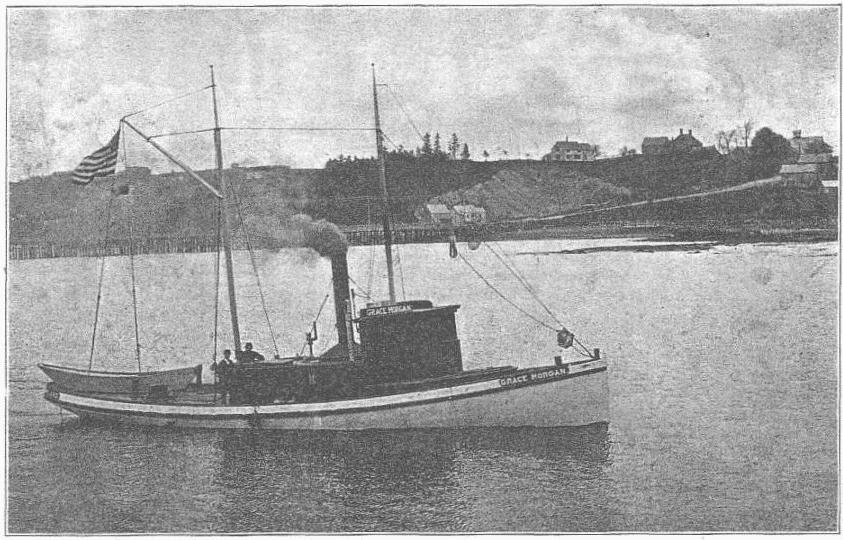
The smack fleet grew from just six vessels in 1853 to 76 by 1898. By then, steam power was entering the picture. One of the most interesting vessels was the Grace Morgan, a steamer bought by Rockland dealer F. W. Collins. He redesigned its well, moving it farther aft where the boat’s motion was steadier, which kept the lobsters from getting battered in heavy seas. Collins reported his redesigned smack successfully carried millions of lobsters, year-round.
The Journey Continues by Rail
A smack’s trip didn’t end at the Portland wharf. There, the lobsters were transferred from the boat’s well into enormous floating “cars”—some capable of holding thousands of lobsters—that were tied up alongside the dock.
| Portland’s Lobster Trade Growth | |
|---|---|
| Pounds handled in 1880 | ~1.9 million |
| Pounds handled in 1898 | >6.1 million |
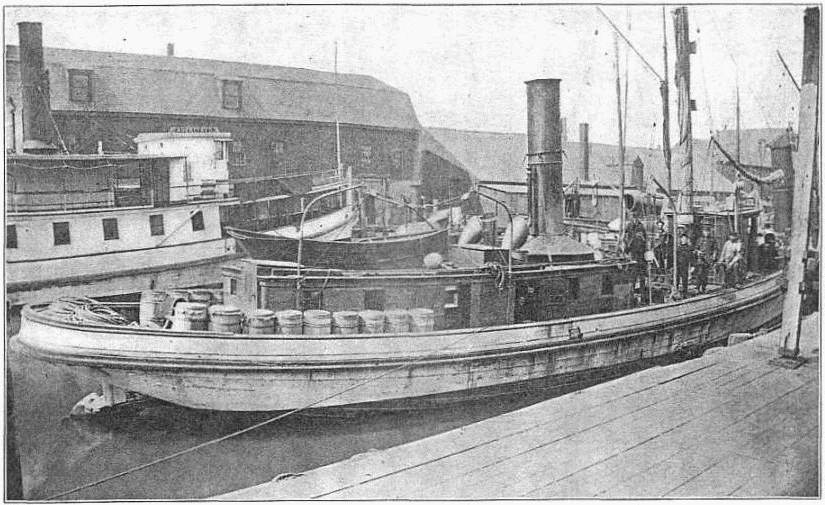
From the floating cars, another transportation system took over. Dealers packed the lobsters into barrels with a large piece of ice running vertically through the middle, then covered them with seaweed and cracked ice. Packed this way, Maine lobsters could survive shipment by rail as far west as St. Louis. A lobster’s journey could start in a trap in Casco Bay, move to a well smack, then to a Portland lobster car, into a barrel, and onto a train.
The End of an Era
The idea lasted for a remarkably long time. As late as 1948, the Webber’s Cove Boatyard in Maine built a 65-foot wet-well smack called the Lynn. She could carry 15,000 pounds of lobster from places like Stonington to Montauk, New York. Her owner’s daughter later wrote that the Lynn was believed to be the last wet-well lobster smack built in the United States. By the 1970s, even that operation had switched to trucks. The smack era was over.
Back on Bailey Island
Today at Cook’s Wharf, things look a lot different, but the core business would make perfect sense to a smackman from 1841. Lobsters still come ashore from local boats. We still have to keep them alive. And we still have to figure out how to get them from our island to a customer somewhere else.
We’ve gotten a lot faster at it, but here in Harpswell, we’ve been working on that same problem for almost two hundred years.